Introduction to Common Adsorbents
The commonly used adsorbents include: activated carbon, natural organic adsorbents, natural inorganic adsorbents, and synthetic adsorbents.
1. Activated Carbon
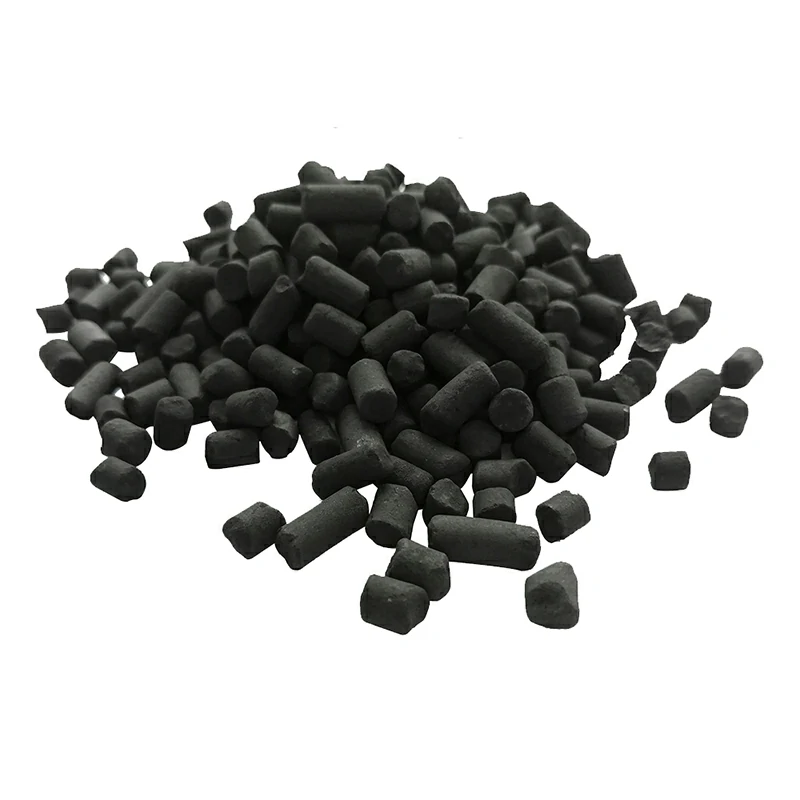
Activated carbon is the most effective adsorbent for removing insoluble floating substances (organic matter, certain inorganic substances) from water. It exists in two forms: granular and powdered. Granular activated carbon is used to remove contaminants from water. The adsorbed contaminants can be recovered and reused through desorption and regeneration. The key factor affecting the adsorption efficiency is the size and polarity of the adsorbed molecules. The adsorption rate decreases as the temperature rises and the pollutant concentration decreases. Therefore, the amount of carbon required for adsorbing a certain substance must be determined through experiments. The experiments should be conducted under conditions similar to those when the leakage occurs.
2. Natural organic adsorbents
Natural organic adsorbents are composed of natural materials such as wood fibers, corn stalks, straw, sawdust, tree bark, peanut shells and other cellulose and rubber. They can remove oil and organic substances similar to oil from water. Natural organic adsorbents have the advantages of being inexpensive, non-toxic and readily available, but they are difficult to regenerate.
3. Natural inorganic adsorbents
Natural inorganic adsorbents are made from natural inorganic materials. Commonly used natural inorganic materials include clay, perlite, vermiculite, expanded shale, and natural zeolite. They are classified into mineral adsorbents and clay-type adsorbents based on the raw materials used. Mineral adsorbents can be used to adsorb various types of hydrocarbons, acids and their derivatives, alcohols, aldehydes, ketones, esters, and nitro compounds; clay-type adsorbents can adsorb molecules or ions, and can selectively adsorb molecules of different sizes or ions of different polarities. The adsorbents made from natural inorganic materials are mainly granular, and their usage is affected by natural conditions such as wind, rain, and snow.
4. Synthetic Adsorbent
Synthetic adsorbents are specially designed for pure organic liquids and can effectively remove land leakage substances and insoluble floating substances in water bodies. For substances with polarity and those that can dissolve or be miscible with water, synthetic adsorbents cannot be used to remove them. One of the advantages of synthetic adsorbents is their regenerability. Commonly used synthetic adsorbents include polyurethane, polypropylene, and resin with a large number of mesh-like structures. Polyurethane comes in several forms: open-pore surface, closed-pore surface, and non-porous. All forms of polyurethane can adsorb leakage substances from aqueous solutions, but the open-pore surface polyurethane can adsorb liquids like a sponge. The adsorption condition depends on the openness, connectivity of the adsorbent’s pore structure, and the viscosity and wetting force of the adsorbed substance, but polyurethane cannot be used to adsorb and treat large leaks or highly toxic leaks. Polypropylene is a linear hydrocarbon polymer that can adsorb inorganic liquids or solutions. Polymers with higher molecular weight and crystallinity have better solubility and chemical resistance, but their production difficulty and cost are high. They cannot be used to adsorb and treat large leaks or highly toxic leaks. The two most commonly used resins are polystyrene and polymethyl methacrylate. These resins can react with ionic compounds and not only have adsorption properties but also exhibit ion exchange.
Adsorbent
I. Overview
Solid substances that can effectively adsorb certain components from gases or liquids.
Adsorbents generally have the following characteristics: large specific surface area, suitable pore structure and surface structure; strong adsorption capacity for adsorbates; generally do not react chemically with adsorbates and the medium; easy to manufacture and regenerate; good mechanical strength, etc. Adsorbents can be classified according to pore size, particle shape, chemical composition, surface polarity, etc., such as coarse and fine pore adsorbents, powdered, granular, strip-shaped adsorbents, carbon-based and oxide adsorbents, polar and non-polar adsorbents, etc. Commonly used adsorbents include various activated carbon adsorbents made from carbon materials and metal, non-metal oxide adsorbents (such as silica gel, alumina, molecular sieves, natural clay, etc.).
The main indicators for evaluating adsorbents are: adsorption capacity for different gas impurities, wear rate, bulk density, specific surface area, compressive strength, etc. They are used for filtering out toxic gases, refining petroleum and vegetable oil, preventing viruses and molds, recovering gasoline in natural gas and removing color from sugar and other substances, etc.
II. Types of Adsorbents
The commonly used adsorbents in industry include: silica gel, activated alumina, activated carbon, molecular sieves, etc. In addition, there are also adsorbent materials specially developed for selective adsorption of certain components. The success of gas adsorption separation largely depends on the performance of the adsorbent. Therefore, choosing the adsorbent is the primary issue in determining the adsorption operation.
1. Silica Gel
It is a hard, amorphous chain and network structure of silicic acid polymer particles, with the molecular formula SiO2.nH2O, and is a hydrophilic and polar adsorbent. It is obtained by treating a sodium silicate aqueous solution with sulfuric acid to form a gel, and then washing away the sodium sulfate with water and drying it to obtain a glassy silica gel. It is mainly used for drying, gas mixtures, and the separation of petroleum components, etc. The silica gel used in industry is divided into coarse pores and fine pores. Under conditions of relative humidity saturation, the adsorption capacity of coarse pore silica gel can reach more than 80% of the weight of the adsorbent, while in low humidity conditions, the adsorption capacity is much lower than that of fine pore silica gel.
1. Active alumina is made by heating the hydrated aluminum compound to remove water. Its properties depend on the structure and state of the initial hydroxide. Generally, it is not pure AI2O3, but a partially hydrated amorphous porous substance, which contains not only amorphous gel but also hydroxide crystals. Due to the high activity of its capillary pore channels surface, it is also called active alumina. It has a strong affinity for water and is an adsorbent used for deep drying of trace water. Under certain operating conditions, its drying depth can reach below the dew point – 70°C.
2. Activated carbon
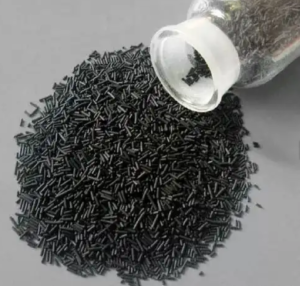
Is made by carbonizing and activating carbon-containing raw materials such as wood charcoal, fruit shells, and coal. The activation methods can be divided into two major categories, namely chemical activation method and gas activation method. The chemical activation method involves adding chemical substances such as zinc chloride and potassium sulfide to the raw materials and heating them in an inert atmosphere for carbonization and activation. The gas activation method is to heat the activated carbon raw materials in an inert atmosphere, usually below 700°C to remove volatile components, then introduce water vapor, carbon dioxide, flue gas, air, etc., and react them within the temperature range of 700 – 1200°C to activate it. Activated carbon contains many capillary pore structures, so it has excellent adsorption capacity. Therefore, it is used in various aspects such as water treatment, decolorization, gas adsorption, etc.
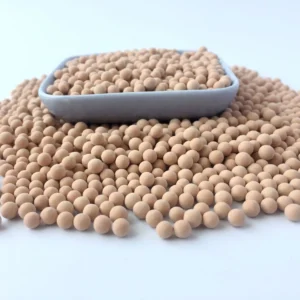
3. Zeolite molecular sieve
Also known as synthetic zeolite or molecular sieve, its chemical composition is represented by the formula: [M2(I)M(n)]O.AI2O3.nSiO2.mH2O
Where M2(I) and M(n) are monovalent and divalent metal ions, mostly sodium and calcium, n is called the silicon-aluminum ratio of the zeolite, silicon mainly comes from sodium silicate and silica gel, aluminum comes from sodium aluminate and AI(HO)3, etc., and they react with sodium hydroxide aqueous solution to form colloidal substances, which are dried to become zeolite. Generally, n = 2 – 10, m = 0 – 9. The characteristic of zeolite is that it has the function of a molecular sieve. It has uniform pore diameters, such as 3A0, 4A0, 5A0, 10A0 fine pores. Zeolite with a 4A0 pore diameter can adsorb methane and ethane, but does not adsorb alkanes with more than three carbons. It has been widely used in gas adsorption separation, gas and liquid drying, and the separation of normal and isomeric alkanes.
4. Carbon molecular sieve
In fact, it is also a type of activated carbon. The difference between it and the common carbon-based adsorbents lies in the fact that the pore diameters of its micropores are uniformly distributed within a narrow range. The size of the micropore diameters is comparable to the diameter of the separated gas molecules, and the specific surface area of the micropores generally accounts for more than 90% of the total surface area of the carbon molecular sieve. The pore structure of the carbon molecular sieve is mainly distributed in the following forms: the large pores are connected to the outer surface of the carbon particles, the transitional pores branch out from the large pores, and the micropores branch out from the transitional pores. During the separation process, the large pores mainly serve as transportation channels, while the micropores play the role of a molecular sieve. The methods for preparing carbon molecular sieves from coal as raw materials include carbonization method, gas activation method, carbon deposition method, and impregnation method. Among these, the carbonization method is the simplest, but to obtain high-quality carbon molecular sieves, it is necessary to comprehensively use these methods. Carbon molecular sieves have achieved success in the field of air separation for nitrogen production and have broad prospects in other gas separation aspects.
III. Physical Properties of Adsorbents
The good adsorption performance of adsorbents is due to their dense and fine pore structure. The physical properties related to the fine pores of the adsorbents include:
a. Pore volume (VP): The volume of micropores in the adsorbent is called pore volume, usually expressed as the volume of micropores per unit weight of the adsorbent (cm3/g). Pore volume is the effective volume of the adsorbent, which is calculated based on the saturated adsorption amount and is the volume that the adsorbent can accommodate the adsorbate. Therefore, a larger pore volume is preferable. The pore volume (Vk) of the adsorbent is not necessarily equal to the pore volume (VP), and only the micropores in the adsorbent have adsorption effects. Therefore, VP does not include the coarse pores. While Vk includes the volume of all pores, and generally is larger than VP.
b. Specific surface area: that is, the surface area per unit weight of the adsorbent, usually expressed in m2/g. The surface area of the adsorbent is several hundred to several thousand square meters per gram. The surface area of the adsorbent is mainly the surface of the micropore walls, and the outer surface of the adsorbent is very small.
c. Pore diameter and pore distribution: In the adsorbent, the shapes of the pores are extremely irregular, and the sizes of the pores are also different. Pores with diameters ranging from several angstroms to several tens of angstroms are called fine pores, and pores with diameters of several hundred angstroms or more are called coarse pores. The more fine pores there are, the larger the pore volume is, and the larger the specific surface area is, which is conducive to the adsorption of the adsorbate. The role of coarse pores is to provide a passage for the adsorbate molecules to enter the adsorbent.
The relationship between coarse pores and fine pores is like that of a street and a small alley. Foreign molecules can quickly reach the deep part of the adsorbent through the coarse pores. Therefore, the proportion of coarse pores should also be appropriate. The coarse pores and fine pores in adsorbents such as activated carbon and silica gel are formed during the manufacturing process. In the synthesis of zeolite molecular sieves, crystals with diameters of several micrometers are formed, among which only uniform fine pores are formed, and the crystals and the pores between them are formed during the shaping process. Pore distribution represents the relationship between the pore size and the corresponding pore volume. This is used to characterize the pore characteristics of the adsorbent.
d. Apparent density (dl): also known as apparent density.
The volume (VI) of the adsorbent particles is composed of two parts: the volume of the solid skeleton (Vg) and the pore volume (Vk), that is:Vl = Vg + Vk The apparent density is the ratio of the weight (D) of the adsorbent particle to its occupied volume (VI). The pore volume (Vk) of the adsorbent is not necessarily equal to the pore volume (VP), and only the micropores in the adsorbent have effects. Therefore, VP does not include the coarse pores. While Vk includes the volume of all pores, and generally is larger than VP.
e. True density (dg): also known as true density or the density of the adsorbent solid, that is, the ratio of the weight (D) of the adsorbent particle to the volume of the solid skeleton (Vg). Assuming that the weight of the adsorbent particle is one gram as a reference, according to the definitions of apparent density and true density:
dI==I/VI ; dg = I/Vg Therefore, the pore volume of the adsorbent is: Vk = I/dI – I/dg f. Packing density (db): Also known as filling density, it refers to the weight of the adsorbent filled in a unit volume. This volume also includes the voids between the adsorption particles. Packing density is an important parameter for calculating the volume of the adsorption bed. The above density units are commonly expressed as g/cm3, kg/I, kg/m3. g. Porosity (k): That is, the ratio of the pore volume within the adsorption particles to the particle volume. £ k = Vk/(Vg + Vk) = (dg – dl)/dg = 1 – dl/dgh. Void ratio (J): That is, the ratio of the voids between the adsorption particles to the total adsorbent packing volume. £ = (Vb – VI)/Vb = (dI – db)/dI = 1 – db/dI
IV. Others
Adsorbents are also called absorbers. This substance can attach the active ingredients to its particle surface, converting liquid micro-compound additives into solid compounds, which is conducive to the implementation of uniform mixing. Its characteristics are strong adsorption and stable chemical properties. Adsorbents are generally divided into two categories: organic and inorganic. Organic types include wheat germ powder, defatted corn germ powder, corn core fragments, coarse bran, soybean fine powder, and water-absorbing grains, etc. Inorganic types include silica, vermiculite, calcium silicate, etc. The most representative adsorbent is activated carbon, with excellent adsorption performance but relatively high cost. It was used in the Songhua River incident to adsorb toluene in the water body. Secondly, there are molecular sieves, silica gel, activated alumina, polymer adsorbents, and biological adsorbents, etc.