Why is the energy consumption of VPSA oxygen generators relatively low?
In the context of the continuous growth in oxygen demand across various industries, the energy consumption of oxygen production equipment directly affects operational efficiency. The recently matured VPSA oxygen production technology has achieved significant energy savings through innovative design, without the need for complex refrigeration equipment or compressing the air to a high pressure. It can produce sufficient oxygen with lower energy consumption and even become a key equipment for carbon reduction in many high-energy-consuming industries. So, how does this technology break through the energy consumption limitations of traditional oxygen production equipment? Here is an analysis of its core principles.
1. The “Simple Working Method” of VPSA Oxygen Generators
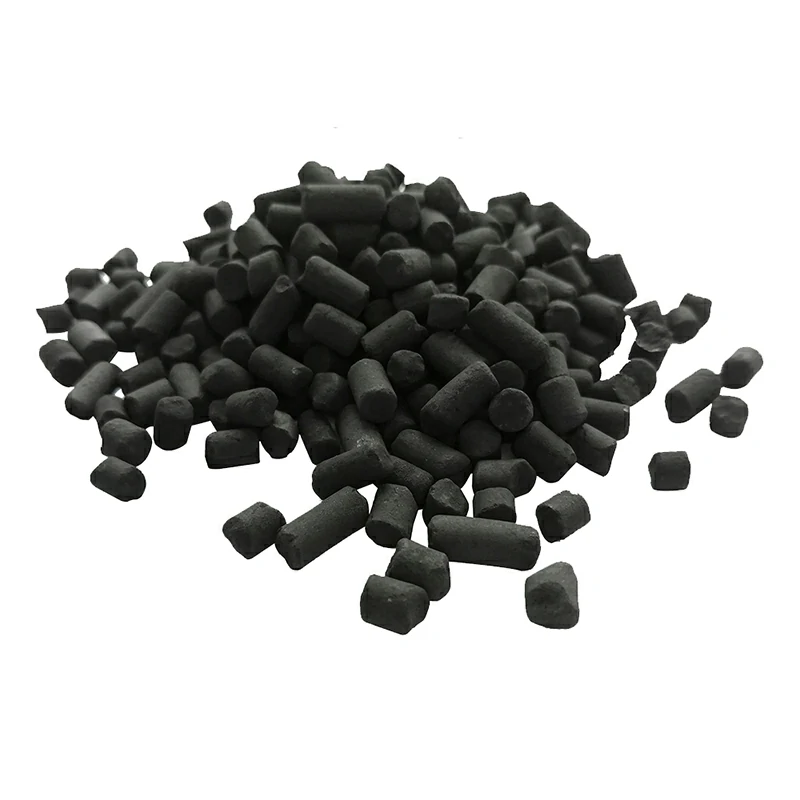
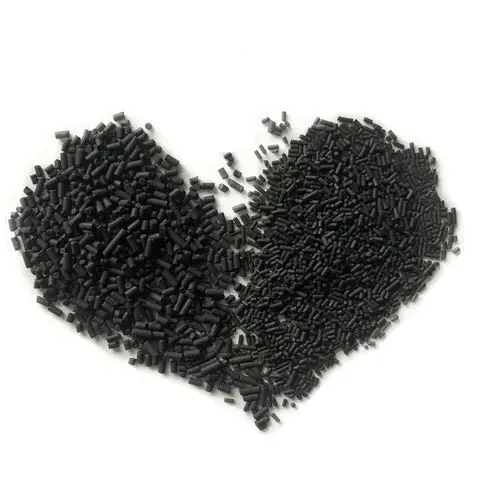
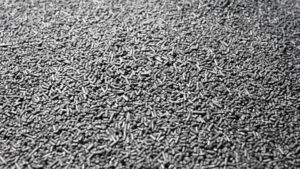
The technology of VPSA oxygen generators adopts an innovative approach: using zeolite molecular sieves to achieve priority adsorption of nitrogen and oxygen separation at room temperature. When air passes through the molecular sieve bed at a lower pressure, nitrogen is adsorbed, and oxygen is enriched for output. After saturation of adsorption, it switches to a vacuum state for nitrogen desorption, achieving molecular sieve regeneration. This process completely avoids phase change, and its adsorption heat is much lower than the liquefaction heat, which is the physical basis for energy advantages. VPSA essentially utilizes the selective adsorption ability of materials to achieve a technological leap from “changing the state” to “selecting molecules”.
2. Pressure Change Circulation and Capacity Recovery Technology
Traditional PSA oxygen production equipment requires pressurizing the air to 1-4 atmospheres. The energy consumption of the pressurization stage is high. The breakthrough innovation of VPSA technology lies in introducing vacuum desorption – adsorbing only under slightly above atmospheric pressure and regenerating under vacuum conditions below atmospheric pressure. This design significantly reduces the pressurization demand and reduces electricity consumption by 10%-30%.
Modern advanced VPSA systems integrate multiple energy-saving technologies to achieve efficient energy recycling and system optimization.
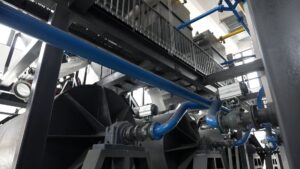
Integrated equipment function: Using high-efficiency Roetz fans, the blower and vacuum pump are combined into one device. During the adsorption stage, it provides air flow as a blower, and during the desorption stage, it switches to a vacuum pump to draw air, with a single device completing both functions, reducing mechanical losses and energy conversion losses.
Exhaust gas pressure energy recovery: The rich nitrogen tail gas still has a certain pressure, and through a turbine or dedicated recovery device, some of the pressure energy of the exhaust gas is converted into mechanical energy to achieve internal energy circulation.
Self-adaptive cycle control: Based on real-time monitoring of oxygen purity requirements, inlet air temperature and humidity, etc., it automatically adjusts the time and pressure parameters of the adsorption-desorption cycle to avoid excessive compression or vacuuming, keeping the system running at the optimal energy efficiency.
3. Modularization and Scalability of VPSA Oxygen Generators
Firstly, the system has the ability to adjust according to demand, automatically adjusting the output based on real-time oxygen consumption. During off-peak hours or low-load periods, energy consumption can be significantly reduced, truly achieving “produce as much as you use” precise matching.
Secondly, VPSA systems have a rapid response characteristic, capable of completing startup and producing qualified oxygen within 30 minutes. This feature enables it to effectively support intermittent production modes, effectively avoiding energy waste caused by equipment idling.
In addition, the system supports on-site deployment, allowing for direct construction at the oxygen-consuming site, thereby completely eliminating pressure losses from long-distance pipeline transportation or evaporation losses during tanker transportation. According to statistics, this method can save 15%-25% additional transportation energy consumption.
In summary, VPSA oxygen generators have energy-saving and load-adjustable characteristics, and can form a collaborative operation system with fluctuating renewable energy sources such as wind power and solar power. This technology can produce “green oxygen” from surplus clean energy during power-rich periods and flexibly reduce load during power shortages, helping the power grid balance fluctuations. The core of its technology lies in the design of an intelligent system, which enables the dynamic matching of oxygen production capacity with actual energy demand. This approach minimizes energy consumption to complete the oxygen production process, providing an innovative technological path for the industrial sector to explore energy synergy and sustainable development.