What are the common types of containerized nitrogen generators?
In the industrial era that values efficiency, flexibility, and integration, containerized nitrogen generators have gradually replaced some traditional fixed-type nitrogen generation equipment due to their high integration level, convenient mobility, and quick installation. They have become a choice for many industries in providing solutions. Currently, the market for containerized nitrogen generators is not limited to a single category. It is differentiated into various types based on nitrogen generation technology principles, functional requirements, and application scenarios. Different types have distinct performances, costs, and application scopes. This article will explore the types and characteristics of containerized nitrogen generators.
I. Three Mainstream Principles of Nitrogen Generation Technology
1. Pressure Swing Adsorption (PSA) Type
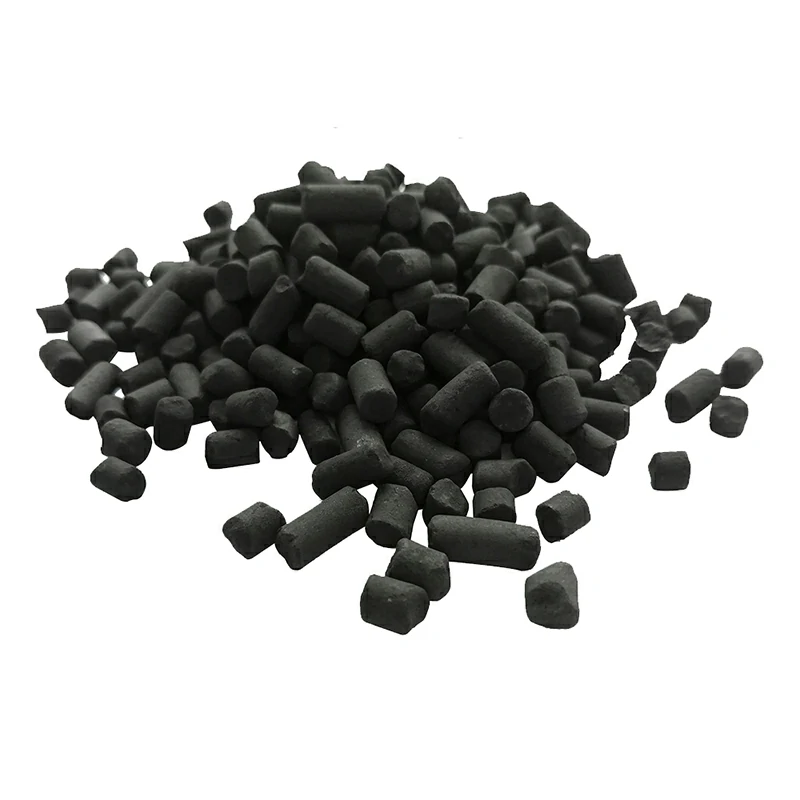
Working principle: Utilizing the adsorption capacity differences of carbon molecular sieves for oxygen and nitrogen, a double tower (or multiple towers) cycle is employed: one tower is pressurized to adsorb oxygen and produce nitrogen, while the other tower is depressurized for desorption and regeneration, alternating to continuously generate nitrogen.
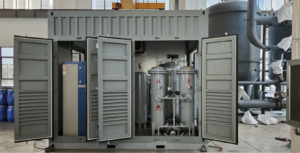
Integration: Built-in or external air compressor → compressed air storage tank → precision filter assembly → refrigeration/adsorption dryer → PSA nitrogen generator → nitrogen buffer tank → on-site monitoring system (purity analyzer, flow meter) → intelligent control system.
Characteristics: The nitrogen purity can be flexibly adjusted between 97% and 99.999%. The equipment operates quickly (about 15-30 minutes) and has outstanding energy efficiency and economic performance within the range of small flow rates (≤ 3000 Nm³/h), with high automation and remote monitoring capabilities.
2. Membrane Separation Type
Working principle: Compressed air enters a hollow fiber membrane group, where oxygen and other “fast gases” pass through the membrane wall and are discharged, while nitrogen is separated and collected.
Integration: Air compressor → efficient oil removal filter → heater (to ensure air temperature) → membrane separation group → nitrogen buffer tank.
Characteristics: It adopts a simple design without moving parts, featuring high reliability, low maintenance requirements, and the ability to start and stop instantly. Its nitrogen purity is inversely proportional to the gas flow rate. It is economically applicable with a purity range of 95%-99.9%, and the maximum single machine flow rate is usually limited to 500 Nm³/h, and its purity and flow rate performance are directly affected by the intake pressure and temperature.
3. Cryogenic Air Separation Type
Working principle: Air is deeply compressed, cooled, and liquefied. Then, using the difference in boiling points of oxygen and nitrogen in a distillation tower, high-purity nitrogen and liquid products can be obtained.
Integration: The entire air separation unit (air compressor, pre-cooling system, purification system, expansion machine, main heat exchanger, distillation tower, liquefaction system, etc.) forms a complete mobile cryogenic air separation device.
Characteristics: It is suitable for large-scale nitrogen production needs and can provide high-purity nitrogen with ≥ 99.9995% purity. The technology has the lowest unit energy consumption during continuous large-scale operation, but its system structure is complex, the startup process takes ten to several dozen hours, and the operational and maintenance professionalism is high, with a large investment cost.
The standard general type, as the most common configuration, integrates the nitrogen generation equipment compactly. The design focuses on optimizing heat dissipation, shock resistance, and maintenance convenience, and has basic protection capabilities. It can be directly deployed in ordinary factory environments to meet the nitrogen supply needs of most fixed sites.
The special environment type of nitrogen generator is customized for harsh conditions. The explosion-proof model uses certified explosion-proof components and enhanced sealing, and is specifically used in hazardous areas such as oil and gas chemical industries. The anti-corrosion model resists marine and chemical corrosion through heavy coating and stainless steel parts. The polar desert model has a temperature control system and can operate reliably in extreme environments ranging from -40°C to 50°C.
The mobile transportation enhanced type emphasizes high mobility. The trailer type fixes the entire box on a heavy-duty chassis and is equipped with a complete lighting and braking system. It can be towed by a truck for road transfer and is suitable for mobile operations such as pipeline inspection. The skid type uses a heavy-duty steel base and although it cannot move independently, it can be lifted by a flatbed truck or helicopter, making it particularly suitable for rapid deployment in complex terrains in the wild.
III. Comparison and Summary of Container-Type Nitrogen Generator Types
When selecting, it is necessary to consider nitrogen purity, flow rate, operating cost, and scene requirements:
High purity + medium-scale: The PSA model is preferred, such as for the 99.999% purity requirement in the electronics industry;
Medium purity + high mobility: Membrane separation models have more advantages, such as for emergency rescue and mobile operations;
Ultra-high purity + ultra-large flow rate: The deep cold air separation model is the only choice, requiring a long-term stable industrial environment;
Special environment + customization requirements: Explosion-proof models or high-pressure dedicated models are more in line with safety regulations in the chemical and oil and gas industries.
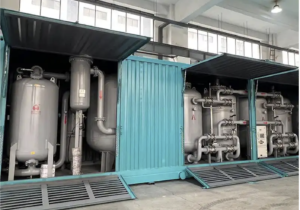
With the development of industrial automation and modularization technology, container-type nitrogen generators are constantly innovating and upgrading, gradually integrating precision processes, high-end equipment manufacturing, and intelligent control technologies into mobile gas factories. The flexibility and safety requirements of various industries for nitrogen supply are increasing, and the performance of these devices will also continue to improve, with a wider application range. In the future, they will undoubtedly become the core development direction in the industrial gas supply field.