What does the “regeneration” stage of an adsorption dryer refer to?
In modern factories, machine equipment requires dry and clean compressed air to operate efficiently and stably. The core equipment of adsorption-type air drying (with a pressure dew point as low as -70℃) has a key secret that is not just “absorbing water”, but lies in its ability to enable the hygroscopic material to “recover dryness and be reused”. This mechanism drives the adsorption-type air dryer to achieve continuous air purification.
I. “Recovery” Phase Essence
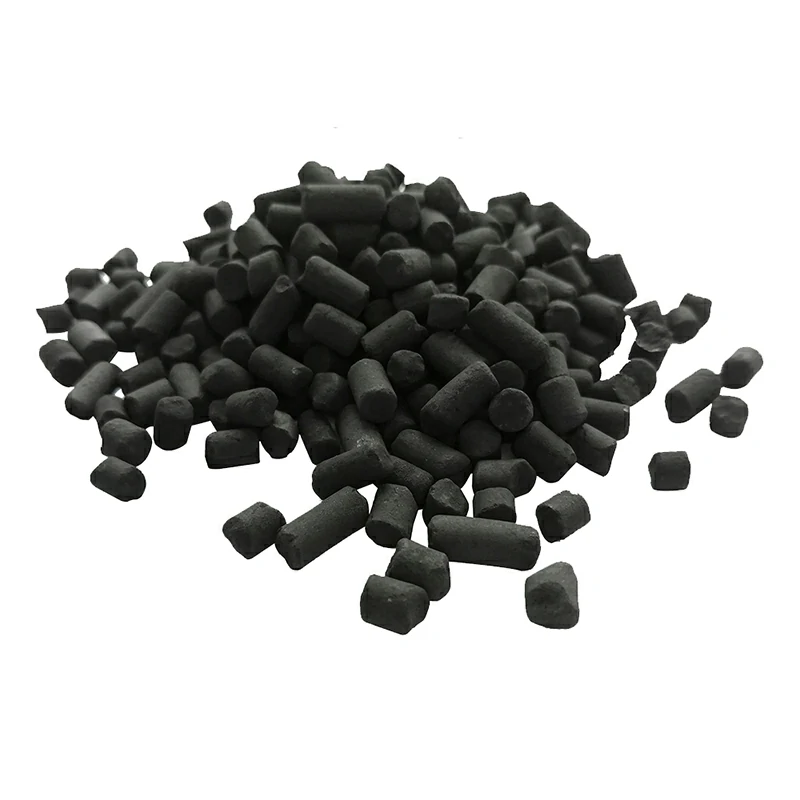
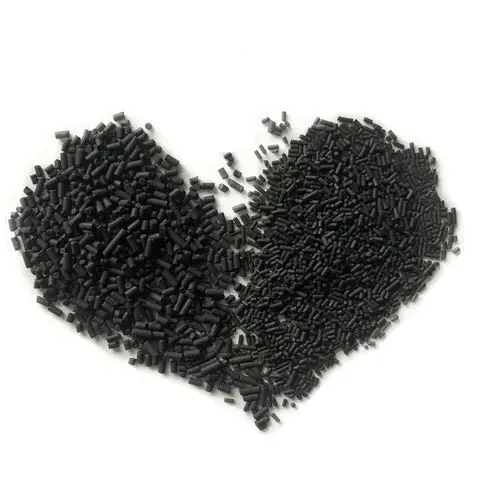
Recovery is the core process of restoring the vitality of saturated drying agents. When the drying agent is saturated with moisture and fails, it needs to break the adsorption equilibrium by reducing pressure (weakening the binding force) and heating (providing desorption energy), and then use the drying air flow to blow away the moisture completely. This is essentially a physical process based on precise control of pressure and temperature, achieving the cycle regeneration of the drying agent through “driving away” water molecules, thereby ensuring the continuous and stable operation of the dryer.
II. Three Main Technological Paths for Recovery
Based on the principle, industry has developed three main technological paths to adapt to different scenarios:
1. Non-heated regeneration is currently the most widely used method. Its principle is “pressure oscillation adsorption”.
Work process: The adsorption tower first adsorbs moisture under high pressure, and then quickly depressurizes to normal pressure to release the water; then a small amount of dry product gas is extracted and blown back to the adsorption bed layer in the opposite direction to completely remove the desorbed moisture and discharge it.
Characteristics: Simple structure, low investment, but requires the consumption of some dry product gas for regeneration. Essentially, it is “creating dry air with dry air”, and the system energy consumption needs to be comprehensively evaluated. It is a typical trade-off between equipment cost and operating air consumption.
2. Heating regeneration is a way to achieve deep drying through temperature changes, and it belongs to “temperature oscillation adsorption”.
Work process: First, electric heaters or steam heat the adsorbent to 150-300℃ to cause a large amount of water molecules to desorb; use a small amount of air flow to carry away the water vapor; finally, it must be cooled to the working temperature with dry cold air before it can be reused.
Characteristics: Deep desorption, can achieve extremely low dew point (down to below -70℃), and the regeneration air consumption is only 1-3%. The disadvantage is high heat consumption, complex equipment structure, and the need for specially designed materials that are resistant to high temperatures and thermal fatigue.
3. Micro-heated regeneration combines the advantages of non-heated and heating, and is the current mainstream choice in the market.
Work process: Heat the regeneration gas to a medium-temperature range (about 40-100℃) and then blow it under near-atmospheric pressure. The mild heating significantly improves the regeneration efficiency.
Characteristics: By using a small amount of heat energy, the consumption of compressed air for regeneration is significantly reduced (typically down to 4-8%), finding the best balance between deep drying effect and operating energy consumption. The total life cycle cost often has more advantages.
Non-heated dryer
III. How does the recovery phase ensure the stable operation of the dryer?
Because the adsorption capacity of the adsorbent is limited and the replacement cost is high, the adsorption-type dryer has designed a “recovery” phase, whose core purpose is to restore the drying capacity of the saturated drying agent and enable its reuse, thereby finding a balance between drying effect and operating economy. And recovery is the “heart” of the dryer, determining the health, efficiency and lifespan of the entire system. Investing and managing the recovery process well is the key to ensuring stable production and reducing total costs.
In summary, the “recovery” of the adsorption dryer, through precise energy conversion to achieve self-renewal of the drying agent, is the fundamental for the equipment to continue operating. The continuous optimization of recovery technology (such as heat recovery, intelligent control) is driving the technology to upgrade, providing more efficient and energy-saving drying power for industry.