Advantages of nitrogen generator activated carbon and carbon molecular sieve as well as their replacement process
Carbon molecular sieves are a new type of adsorbent developed in the 1970s. They are an excellent non-polar carbon material. Nitrogen-adsorbing carbon molecular sieves are used to separate air and enrich nitrogen. The nitrogen-adsorbing carbon molecular sieves are produced using a normal temperature and low pressure nitrogen production process, which has the advantages of lower investment costs, faster nitrogen production speed, and lower nitrogen cost compared to the traditional deep cooling and high-pressure nitrogen production processes. Therefore, it is currently the preferred变压吸附 (P.S.A) nitrogen-enriching adsorbent in the engineering field. This nitrogen gas is widely used in various fields such as chemical industry, petroleum and natural gas industry, electronics industry, food industry, coal industry, pharmaceutical industry, cable industry, metal heat treatment, transportation and storage.
Working principle
Carbon molecular sieves utilize the sieve characteristics to achieve the purpose of separating oxygen and nitrogen. When molecular sieves adsorb impurity gases, the large pores and medium pores only serve as channels, transporting the adsorbed molecules to the micropores and sub-micropores. The micropores and sub-micropores are the actual volume that performs the adsorption function. As shown in the figure above, carbon molecular sieves contain a large number of micropores. These micropores allow molecules with a dynamic size smaller than the pore diameter to rapidly diffuse into the pores, while restricting the entry of large-diameter molecules. Due to the difference in relative diffusion rates of gases of different sizes, the components of the gas mixture can be effectively separated. Therefore, when manufacturing carbon molecular sieves, the distribution of micropores inside the molecular sieves should be 0.28 to 0.38 nm. Within this micropore size range, oxygen can rapidly diffuse through the pore opening into the pores, while nitrogen is difficult to enter the pores, thus achieving the separation of oxygen and nitrogen. The size of the micropores is the basis for the separation of oxygen and nitrogen by carbon molecular sieves. If the pore size is too large, both oxygen and nitrogen molecules in the molecular sieve can easily enter the micropores, which does not achieve the separation effect; while if the pore size is too small, neither oxygen nor nitrogen can enter the micropores, which also does not achieve the separation effect.
The research and development of carbon molecular sieves in China began in the 1980s, about twenty years later than the United States. At that time, the main carbon molecular sieves available in the international market were those produced by German BF and Japanese Kurashiki. The price was approximately 200,000 yuan per ton, but their nitrogen production capacity was about 100 NM3/h.t. By the 1990s, it was upgraded to a nitrogen production capacity of 185 NM3/h.t. At that time, the nitrogen production capacity of domestic carbon molecular sieves was only 140 NM3/h.t. Although the indicators were lagging by nearly 30% compared to the previous ones, it rewrote the history that China could only rely on imported carbon molecular sieves and achieved a leap from nothing to something! Due to the low price of domestic carbon molecular sieves, the price of imported carbon molecular sieves has dropped significantly, saving foreign exchange for the country and promoting the vigorous development of domestic PSA nitrogen production devices.
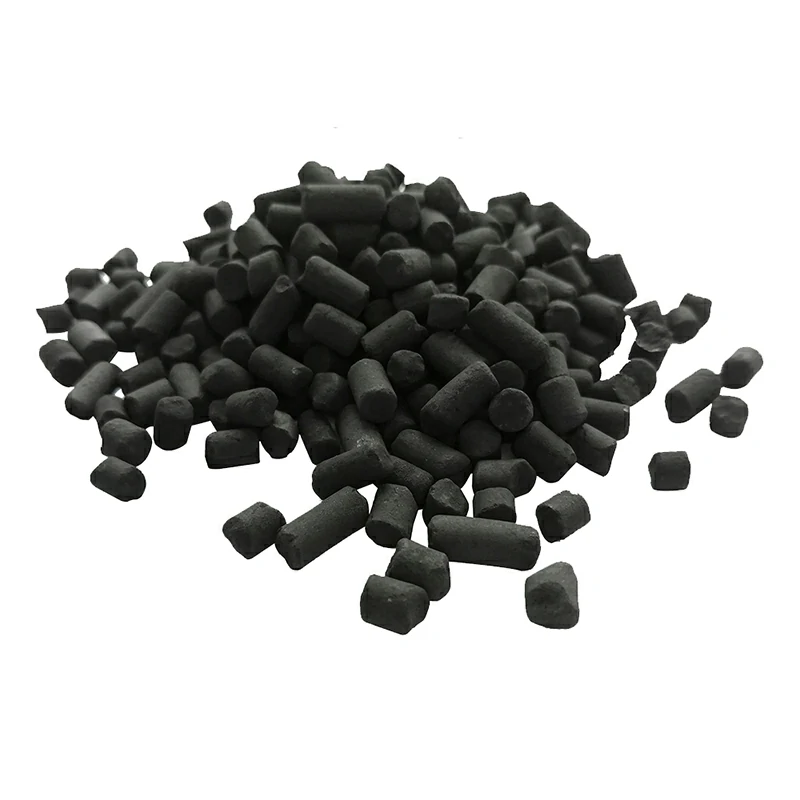
Domestic molecular sieves, due to the limitations of conditions, do not control the pore size very well. The domestic market mainly adopts medium and low-grade carbon molecular sieves. The micropore diameters sold on the market range from 0.3 to 1 nm. Only the Yakei molecular sieve has achieved 0.28 to 0.36 nm. The raw materials of carbon molecular sieves are coconut shells, coal, resin, etc. The first step is to process and powderize them, and then mix them with the base material. The base material mainly increases strength and prevents fragmentation and powderization; the second step is activation and pore formation, where an activating agent is introduced at 600 to 1000°C. Common activating agents include steam, carbon dioxide, oxygen, and their mixtures. They undergo thermal chemical reactions with more active amorphous carbon atoms to expand the specific surface area and gradually form pores. The activation time ranges from 10 to 60 minutes; the third step is pore structure adjustment, using vapor of chemical substances such as benzene to deposit on the micropore walls to adjust the size of the pores to meet requirements. German BF molecular sieves, Japanese Takeda carbon molecular sieves, and Japanese Iwaguro molecular sieves, as well as special activated carbon for nitrogen generators, 13X molecular sieves, and 5A molecular sieves, are mainly used in pressure swing adsorption (PSA) nitrogen generation equipment. Molecular sieves are a new type of non-polar adsorbent that has the property of adsorbing oxygen molecules in the air at normal temperature under pressure changes, thus enabling the production of enriched nitrogen gas. The new nitrogen generation technology using carbon molecular sieves for pressure swing adsorption has the most significant feature: the nitrogen product has a lower impurity content, the nitrogen concentration and volume can be adjusted as needed, and high-purity nitrogen with an O2 content of less than 5PPm and a dew point lower than -60℃ can be obtained through purification.
Maintenance and servicing methods for nitrogen generators
1) Install a timed drainage device at the sewage outlet of the air storage tank to reduce the processing load pressure.
2) During the normal use of the equipment, check whether each timed drainage device is draining normally, whether the air pressure is above 0.6Mpa, compare the cold dryer inlet and outlet to see if there is a cooling effect. Check whether the purity of the nitrogen is stable.
3) The air filter must be replaced at a frequency of once every 4,000 hours.
4) The activated carbon filter can effectively filter oil stains and can extend the service life of high-quality carbon molecular sieves. The activated carbon needs to be replaced once every 3,000 hours or 4 months. Maintenance and replacement of components for nitrogen generators.
5) For pneumatic valves and electromagnetic valves of the nitrogen generator, it is recommended to have one spare of each model to prevent future problems.
Activated carbon
Activated carbon and carbon molecular sieve replacement procedure: Clean the site simply, cut off the gas supply and power supply, two people remove the head of the adsorption tower, two people remove all the pipelines of the nitrogen generator, clear the waste materials inside the adsorption tower, it needs to be cleaned thoroughly. Check whether the top and bottom分流 plates of the nitrogen adsorption tower of the nitrogen gas equipment are damaged. If damaged, repair them in time. All pipelines should be blown clean with compressed air. Check the damage of the sealing ring of the pneumatic valves, if it is severe, replace the pneumatic valves. Update the filter of the air treatment part, and renovate the pipelines of the activated carbon filter. One person will carry out the construction simultaneously. All work is completed, install all pipelines and valves, supply gas and power, blow the entire system pipelines once, start the carbon molecular sieve loading operation. Specifically, there will be on-site guidance personnel to guide. After loading is completed, start the nitrogen generator, check whether each interface leaks gas at the same time, and test the purity and production capacity of the nitrogen gas.