Carbon Molecular Sieve User Manual
Our company specializes in the research, production and sales of carbon molecular sieves. We are a large-scale and high-quality carbon molecular sieve manufacturer in China. The quality indicators of our products have always been at the forefront in China and have reached the quality level of imported carbon molecular sieves.
Carbon Molecular Sieve (CMS) is a new type of non-polar adsorbent. It has the performance of adsorbing oxygen molecules in the air under normal temperature and pressure conditions, thus enabling the production of enriched nitrogen gas.
1. Main models of the product II.
The carbon molecular sieve products of our company are divided into four different models. CMS-330, CMS-300, CMS-280,CMS-260,CMS-240,CMS-220
II. Principles of Nitrogen Production by Carbon Molecular Sieve Absorption Separation
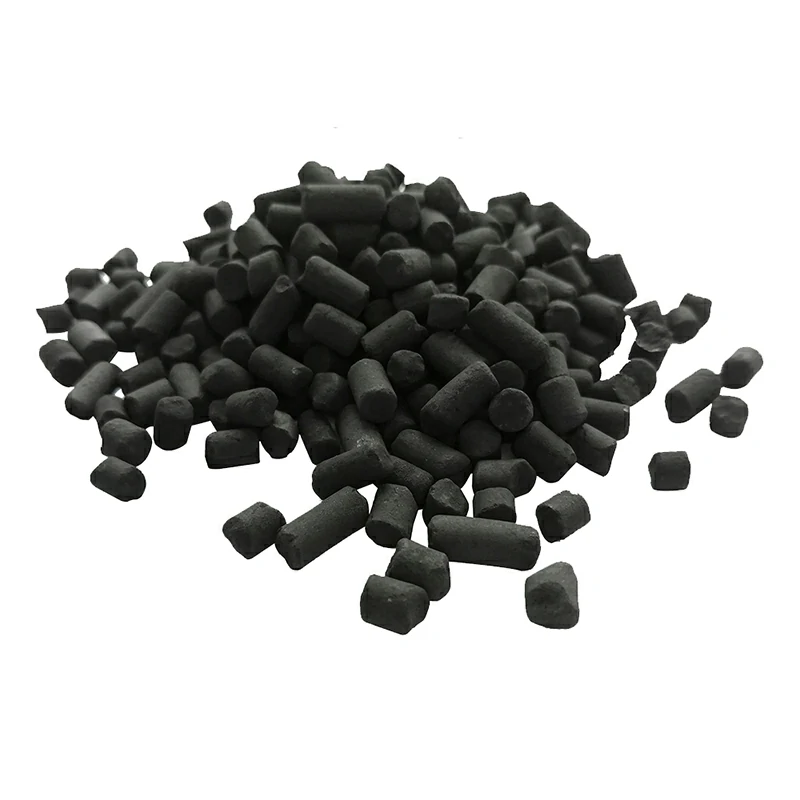
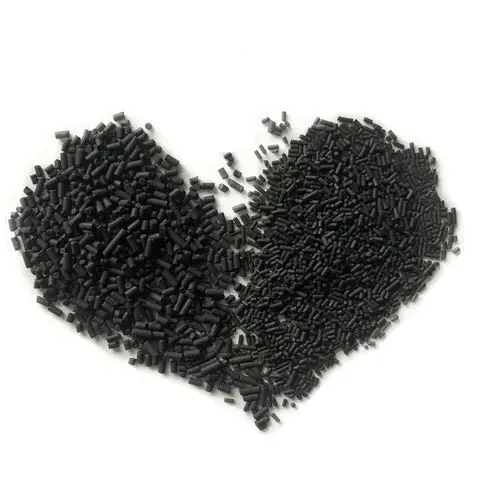
The pressure swing adsorption nitrogen production machine uses carbon molecular sieves as the adsorbent and operates based on the principle of pressure adsorption and pressure release to adsorb and release oxygen from the air, thereby separating out nitrogen. This is an automated equipment. Carbon molecular sieves are a type of cylindrical granular adsorbent with micro pores on the surface and inside, processed from resin as the main raw material through grinding, shaping, carbonization, and deposition activation. They appear black.
The pore size distribution characteristics of carbon molecular sieves enable the dynamic separation of O2 and N2. Such a pore size distribution allows different gases to diffuse into the micropores of the molecular sieve at different rates without excluding any of the gases in the mixed gas (air). The separation effect of carbon molecular sieves on O2 and N2 is based on the small difference in the dynamic diameters of these two gases. The dynamic diameter of O2 molecules is smaller, so they have a faster diffusion rate in the micropores of the molecular sieve, while the dynamic diameter of N2 molecules is larger, so their diffusion rate is slower. The diffusion of water and CO2 in compressed air is not much different from that of oxygen, while argon diffuses more slowly. Finally, the enriched gas from the adsorption tower is a mixture of N2 and Ar.
The adsorption characteristics of carbon molecular sieves for O2 and N2: An increase in adsorption pressure can simultaneously increase the adsorption amounts of O2 and N2, and the increase in the adsorption amount of O2 is greater. The adsorption cycle of pressure swing adsorption is short, and the adsorption amounts of O2 and N2 have not yet reached equilibrium (maximum value), so the difference in diffusion rates of O2 and N2 causes the adsorption amount of O2 to significantly exceed that of N2 in a short period of time.
Pressure swing adsorption for nitrogen production precisely utilizes the selective adsorption characteristics of carbon molecular sieves, using a cycle of pressurized adsorption and depressurized desorption to alternate the compressed air entering the adsorption tower (it can also be completed in a single tower) to achieve air separation, thereby continuously producing high-purity product nitrogen.
III. Carbon Molecular Sieve Air Separation Nitrogen Production Unit
After the air is compressed by the air compressor, it undergoes oil removal, drying, and dust removal. Then it enters the air storage tank. The air passes through the air inlet valve and the valve of tower A before entering the tower A support tower. As the tower pressure increases, the oxygen molecules in the compressed air are adsorbed by the carbon molecular sieve. The unadsorbed nitrogen passes through the adsorption bed and enters the nitrogen storage tank through the outlet valve of tower A and the nitrogen production valve. This process is called tower A adsorption and lasts for several seconds. After the tower A adsorption process is completed, tower A and tower B are connected through the upper and lower equalizing valves to achieve pressure equilibrium. This process is called equalization and lasts for 1 to 3 seconds. After the equalization process is completed, the compressed air passes through the air inlet valve and the inlet valve of tower B and enters the B adsorption tower. The oxygen molecules in the compressed air are adsorbed by the carbon molecular sieve, and the enriched nitrogen passes through the outlet valve of tower B and the nitrogen production valve and enters the nitrogen storage tank. This process is called tower B adsorption and lasts for several seconds. At the same time, the oxygen adsorbed by the carbon molecular sieve in tower A is released back to the atmosphere through the exhaust valve of tower A. This process is called desorption. Conversely, tower A adsorption is accompanied by desorption in tower B. To ensure that the oxygen released from the molecular sieve is completely discharged into the atmosphere, nitrogen is blown through a normally open back-blow valve to blow out the oxygen in the adsorption tower being desorbed, and this process is called back-blowing. It is carried out simultaneously with desorption. After the B adsorption process is completed, the equalization process begins, and then the process switches to tower A adsorption, continuing in a cycle.
The working process of the nitrogen production unit is controlled by PLC through electromagnetic valves, and the opening and closing of pneumatic pipeline valves are controlled by the electromagnetic valves to complete the process. The electromagnetic valves control the states of A adsorption, equalization, and B adsorption. The time flow of A adsorption, equalization, and B adsorption has been stored in the PLC controller. In the event of power failure, the pilot gas of the electromagnetic valves is connected to the opening ports of the pneumatic valves. When the process is in the A adsorption state, the electromagnetic valve controlling A adsorption is energized, and the pilot gas is connected to the opening ports of the A intake valve, A exhaust valve, and B exhaust valve, causing these three valves to open, completing the A tower adsorption process, while the B adsorption tower is desorbing. When the process is in the equalization state, the electromagnetic valve controlling equalization is energized, and the other valves are closed; the pilot gas is connected to the opening ports of the upper equalization valve and the lower equalization valve, causing these two valves to open, completing the equalization process. When the process is in the B adsorption state, the electromagnetic valve controlling B tower adsorption is energized, and the pilot gas is connected to the opening ports of the B intake valve, B exhaust valve, and A exhaust valve, causing these three valves to open, completing the B tower adsorption process, while the A adsorption tower is desorbing. In each process, except for the valves that should be opened, all other valves should be closed.
IV. Conditions to be Controlled for Carbon Molecular Sieves
1. Pre-treatment of raw air
It is very necessary for clean raw air to enter the carbon molecular sieve adsorption tower. Because oil vapor entering will block the micropores of the carbon molecular sieve, greatly reducing the separation effect. After the raw air is compressed by the air compressor, not only does the air temperature increase, but there will also be oil vapor (especially in oil-lubricated air compressors), so it is necessary to go through a cooler and a purification system for oil removal, drying, etc. Therefore, the requirements for the raw air by the carbon molecular sieve are: dew point ≤ -40℃; oil content ≤ 0.3 PPM; organic gases < 0.1 PPM. The treated clean raw air enters the carbon molecular sieve adsorption tower for adsorption and reuse, and can be continuously regenerated.
2. Concentration and production volume of product nitrogen
The nitrogen produced by carbon molecular sieve can be adjusted arbitrarily according to the user’s needs for N2 concentration and production volume. When the production volume decreases, the N2 concentration will increase, and vice versa. Users can consider both factors comprehensively according to actual needs to obtain low-cost nitrogen.
3. Equalization time
During the nitrogen production process using carbon molecular sieves, when one adsorption tower finishes its adsorption, the gas inside this tower needs to be injected from both the top and bottom directions into another regenerated adsorption tower to make the gas pressures in both towers the same. This process is called pressure equalization of the adsorption towers. Choosing an appropriate pressure equalization time can not only recover energy but also reduce the impact on the carbon molecular sieves inside the adsorption tower, preventing them from pulverizing and extending the service life of the sieves. Generally, the pressure equalization time is selected to be 1-3 seconds.
4. Gas production time
Due to the different adsorption rates of carbon molecular sieves for oxygen and nitrogen, the adsorption of O2 reaches equilibrium in a short time, and at this point, the adsorption amount of N2 is very small. If the adsorption time is appropriately prolonged, it can save raw air, reduce energy consumption, reduce the frequency of valve opening and closing on the nitrogen generator, improve the stability of the device, and extend the service life of the molecular sieves. Generally, the adsorption time is selected to be 45-60 seconds.
5. Operating pressure
Higher adsorption pressure leads to a larger adsorption capacity. Therefore, pressurized adsorption is beneficial, but if the adsorption pressure is too high, the air energy consumption and the requirements of the device also increase. Therefore, the adsorption pressure needs to be selected from the perspective of comprehensive energy consumption. It is recommended that for the normal pressure regeneration process, the adsorption pressure should be selected to be 0.7-0.8 MPa.
6. Operating temperature
Because the adsorption process has a heat release effect, the higher the adsorption temperature, the lower the adsorption capacity. The requirement for the environment temperature of the nitrogen generator is: ≤20℃ is the most suitable. Therefore, choosing a lower adsorption temperature is beneficial for the performance of the nitrogen generation. In the process of the nitrogen generator, if conditions permit, it is beneficial to adopt a lower adsorption temperature.
V. Product Packaging and Usage
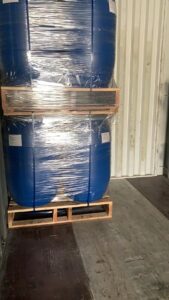
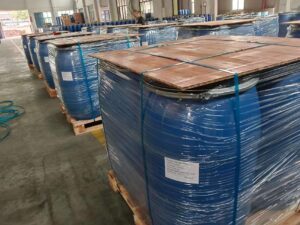
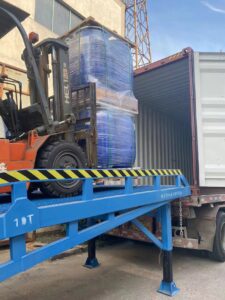
1. Our products are packaged in polyethylene plastic drums. The net weight is 40KG per drum and 20KG per drum. They are vacuum-packed and have excellent sealing properties.
2. Vacuum packaging of carbon molecular sieves can effectively increase the storage time of the carbon molecular sieves. Users must open the packaging again before use. It is strictly prohibited to store the carbon molecular sieve products in the air for a long time, especially in environments with high humidity or containing oil or organic substances.
3. During the filling process of the carbon molecular sieve products, they must be packed tightly. Vibration tools or vibration tables can be used to vibrate the adsorption tank, or more effective methods can also be used to consolidate the carbon molecular sieves. In any case, it is strictly prohibited to directly tamp the carbon molecular sieves with any tools.