What is the back-blowing gas in the PSA nitrogen generator?
Overview of the Working Principle of Pressure Swing Adsorption
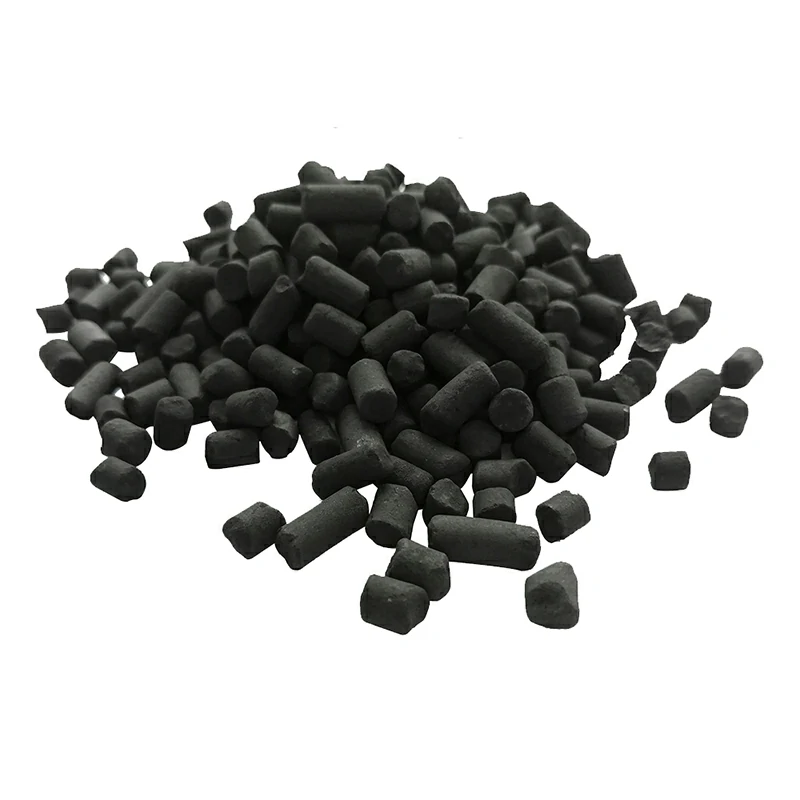
For PSA nitrogen generators, pressure swing adsorption requires a cycle between towers A and B. The complete adsorption process can be divided into two stages. The first is pressurized adsorption, and the second is depressurized desorption. In stage 1, the carbon molecular sieve adsorbs oxygen and impurities from the compressed air and enriches nitrogen as the product gas for output. Entering stage 2, the oxygen in the compressed air is completely adsorbed, and the carbon molecular sieve reaches saturation. At this point, the oxygen and impurities adsorbed in the carbon molecular sieve need to be completely released to prepare for the next round of adsorption. This process is called “regeneration” and it needs to be achieved under a depressurization condition.
However, in reality, when the pressure drops to a micro-positive pressure (approaching zero) under the depressurization condition, the adsorption tower will be filled with high-concentration oxygen released by the carbon molecular sieve. This cannot ensure that the oxygen in the carbon molecular sieve of the adsorption tower is completely removed; therefore, a reverse blowing gas is needed to assist in cleaning.
Technical Implementation
The reverse blowing gas is taken from the adjacent adsorption tower. When towers A and B are operating alternately, when tower A is in the desorption state, tower B is in the state of adsorbing and producing nitrogen; at this time, the product nitrogen in tower B will flow back to the desorption stage of tower A, sweeping away the residual oxygen and impurities in the tower and assisting the carbon molecular sieve in completing an efficient “regeneration”. The oxygen that is removed will be completely discharged into the atmosphere. This process occurs simultaneously with desorption, ensuring that the oxygen that has been adsorbed is completely removed, avoiding any impact on the purity of the product nitrogen.
The Importance of Reverse Blowing Gas
In PSA nitrogen production equipment, reverse blowing gas is an important process. It can increase the regeneration speed and effect of the carbon molecular sieve, and also sweeps impurities in the tank. The benefits of this are as follows:
1. Ensure product nitrogen quality: Reverse blowing gas enables the carbon molecular sieve to quickly and thoroughly “regenerate”, which means that the next round of adsorption effect can be guaranteed, and the nitrogen gas purity is stable.
2. Ensure stable system operation: When one tower approaches saturation, starting the reverse blowing program in time can avoid the risk of sudden drop in production volume or machine shutdown due to blockage; it is one of the important technical links for continuous and stable production of specified purity nitrogen gas in the PSA process.
At the same time, a reasonable reverse blowing pressure can reduce mechanical wear of the equipment, especially the protective effect on valves and pipelines is significant.
In conclusion, reverse blowing gas is not a simple physical cleaning process; it is an important mechanism to ensure the efficient and stable operation of pressure swing adsorption. Although reverse blowing gas does have the problem of consuming product nitrogen, its core value lies in exchanging a controllable short-term cost for system efficient operation and resource utilization improvement.
Of course, the actual effect of reverse blowing gas is closely related to the process design, parameter control, and equipment management of the PSA nitrogen production system.