Working principle of industrial oxygen generator
An industrial oxygen generator is a device that removes nitrogen and other impurities from the air, thereby purifying it into high-concentration oxygen. Its working principle mainly consists of the following steps:
1. Air compression: Firstly, industrial oxygen generators compress the air in the atmosphere. This is usually achieved using compressors. Through compression, the pressure and density of the air increase.
2. Cooling: Next, the compressed air will pass through a cooler where it is cooled down. The purpose of cooling is to condense water vapor and other liquid impurities into liquid form, thereby further purifying the air. The cooled air is then sent to the molecular sieve.
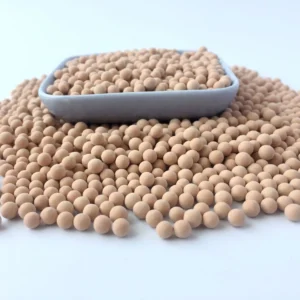
3. Molecular sieve adsorption: In the molecular sieve, nitrogen and other impurities in the air will be adsorbed, forming a relatively pure oxygen stream on the sieve. Molecular sieves usually use molecular sieve adsorbents, such as nitrogen selective adsorbents. These adsorbents have the property of adsorbing nitrogen while keeping oxygen in the gas stream.
4. Desorption: When the molecular sieve adsorbent reaches its saturation point, a desorption process is necessary to release the adsorbed nitrogen and other impurities from the molecular sieve. This process is commonly referred to as backflushing. Industrial oxygen production equipment can restore the adsorption capacity of the molecular sieve by means of counter-flow washing, providing heating or reducing pressure, etc., which enables the molecular sieve adsorbent to re-desorb and release the adsorbed nitrogen and impurities.
5. Oxygen Output: After the above-mentioned processing steps, the industrial oxygen generator ultimately produces high-concentration oxygen. This oxygen can be transported through pipelines to the required locations and used in various industrial applications.
In summary, the working principle of industrial oxygen generators mainly involves steps such as air compression, cooling, molecular sieve adsorption and desorption. Through these steps, impurities in the air are removed, resulting in high-purity oxygen.