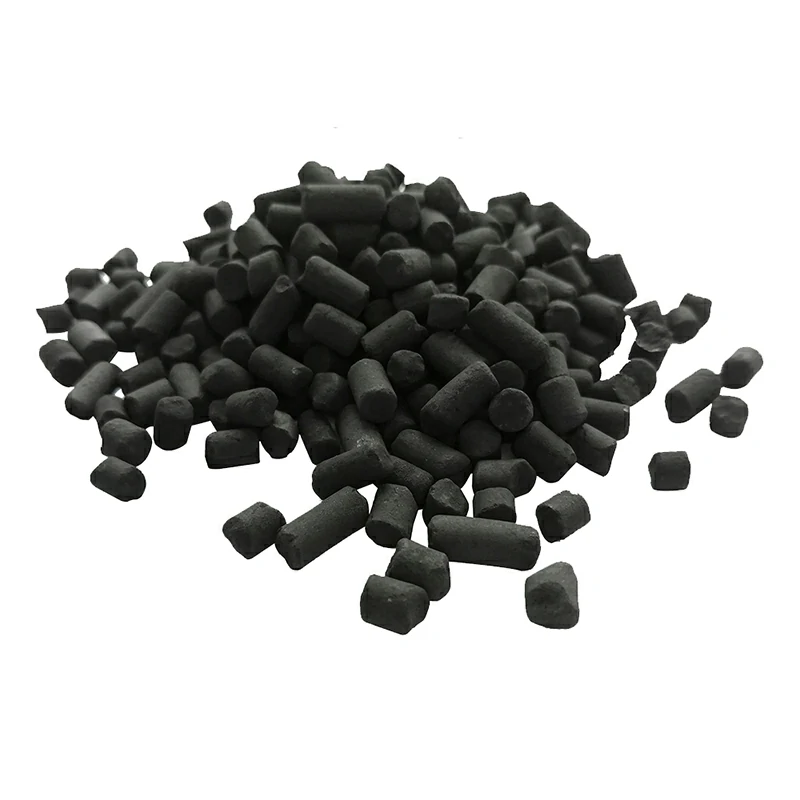
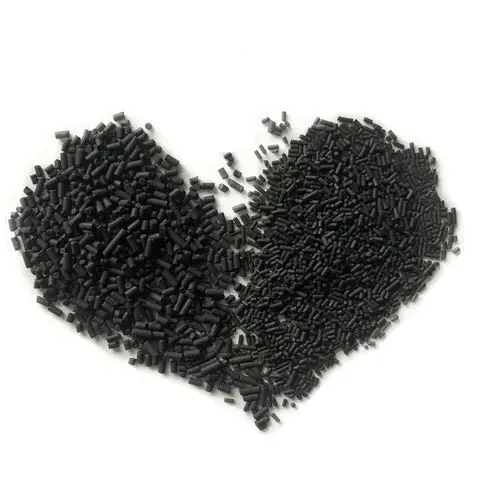
Strategies for Improving the Separation Efficiency of Carbon Molecular Sieves in PSA nitrogen generators
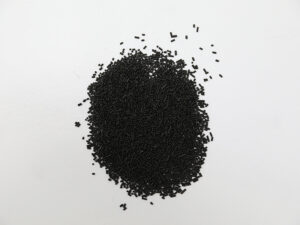
Carbon molecular sieves (CMS) are the core adsorption materials in pressure swing adsorption (PSA) nitrogen generators, which achieve nitrogen-oxygen separation through selective adsorption of oxygen. To enhance the separation efficiency of CMS, it is necessary to make concerted efforts from multiple dimensions such as material performance optimization, operation parameter control, regeneration process improvement, system structure design, and daily maintenance. The following is an analysis of key technical paths:
I. Optimization of the Performance of Carbon Molecular Sieves Themselves
The separation capacity of CMS depends on its microporous structure and surface characteristics, and it is necessary to precisely control the preparation and selection process.
Precise control of pore size distribution: The diameter of nitrogen molecules is approximately 0.364 nm, and that of oxygen molecules is about 0.346 nm. The micropore size of CMS should be concentrated in the range of 0.35 to 0.4 nm, which allows oxygen to be preferentially adsorbed (kinetic advantage) while preventing excessive adsorption of nitrogen. By adjusting the carbonization temperature (800 to 1100°C), activation time, and additives (such as KOH), the proportion of micropores can be optimized, and the selective adsorption capacity can be enhanced.
2. Balance of specific surface area and pore volume: A high specific surface area (800 – 1200 m²/g) can increase adsorption sites, but it is necessary to avoid overly developed micropores that increase mass transfer resistance. An ideal CMS should balance adsorption capacity and mass transfer rate. Generally, the proportion of micropores should be ≥ 80%, and the proportion of mesopores should be controlled at 10% – 15% to facilitate gas diffusion.
3. Surface polarity modification: Oxygen has a weak polarity. By surface oxidation or loading polar groups (such as hydroxyl groups), the adsorption affinity of CMS for oxygen can be enhanced, further expanding the difference in nitrogen and oxygen adsorption.
II. Fine-tuning of Operating Parameters
The operating conditions of PSA nitrogen production directly affect the separation efficiency of CMS and the following parameters need to be dynamically optimized:
Adsorption pressure: Appropriately increasing the adsorption pressure (0.6 to 1.0 MPa) can enhance the oxygen adsorption capacity in CMS, but excessively high pressure will increase energy consumption and may lead to co-adsorption of nitrogen. The pressure should be determined based on the adsorption isotherm of CMS, balancing purity and energy consumption.
2. Adsorption time: If the adsorption time is too short, oxygen will not be fully adsorbed, resulting in a decrease in purity; if it is too long, the CMS will become saturated, and the purity of nitrogen will also decrease. By monitoring the purity of nitrogen at the outlet online, the adsorption time (usually 30 to 120 seconds) is adjusted to ensure that the CMS switches to desorption when it is close to saturation but has not yet exceeded the adsorption front.
3. Desorption method and vacuum degree: Vacuum desorption (with a vacuum degree of 0.02 to 0.05 MPa) is more thorough than desorption under normal pressure, which can reduce the residual oxygen in CMS and enhance the adsorption efficiency of the next cycle. Combined with nitrogen back-blowing (using product nitrogen to purge the desorption tower), it can further remove the oxygen in the micropores and shorten the regeneration time.
4. Gas flow velocity: The empty tower flow rate should be controlled at 0.1 to 0.3 m/s to prevent excessive flow rate from causing gas short-circuiting (insufficient contact with CMS) or too slow a rate from reducing production efficiency. A distributor is used to ensure the gas flows uniformly through the CMS bed to minimize uneven adsorption in local areas.
III. Improvement of Recycling Process
The regeneration effect of CMS directly determines the adsorption performance of the next round, and the regeneration process needs to be strengthened.
Full desorption time: The desorption time should be no less than 1.2 to 1.5 times the adsorption time to ensure that the oxygen in the micropores is completely desorbed. For high-purity nitrogen production (≥99.99%), the desorption time should be extended or the vacuum degree should be increased.
2. Temperature-assisted regeneration: During the desorption stage, appropriate heating (80 to 120°C) can reduce the adsorption energy of oxygen on the CMS surface and accelerate desorption. However, the temperature should not exceed 150°C to prevent structural damage to the CMS.
3. Avoid incomplete regeneration: Regularly check the residual oxygen content in the CMS after regeneration. If the residual oxygen is too high, adjust the vacuum degree or back-blowing flow rate to prevent the “memory effect” from affecting subsequent adsorption.
IV. System Structure and Airflow Distribution Optimization
The hardware design of the nitrogen generator needs to be compatible with the performance of the CMS.
Adsorption tower filling uniformity: During CMS filling, stratification or voids should be avoided. Vibration filling or layer-by-layer compaction should be adopted to prevent air flow short-circuiting. A perforated plate or wire mesh should be installed at the top of the bed to ensure uniform air flow distribution.
2. Valve switching efficiency: Quick-switching valves (switching time < 0.5s) are adopted to reduce the residual mixed gas in the dead volume and avoid fluctuations in nitrogen purity. The sealing performance of the valves must meet the standards to prevent gas leakage between the high-pressure adsorption tower and the low-pressure desorption tower.
3. Intake Pre-treatment: The raw air must undergo oil removal, water removal and dust removal treatment (oil content ≤ 0.01mg/m³, water content ≤ -40℃ dew point) to prevent oil mist from clogging the CMS micro-pores or moisture from causing
a decline in adsorption performance.
V. Daily Maintenance and Life Management
The lifespan of a CMS is typically 5 to 8 years, and its effective period can be extended through maintenance.
Regular performance checks: Test the purity of the nitrogen gas at the outlet, the adsorption time and pressure changes every 3 to 6 months. If the purity drops significantly, check whether the CMS has powdered or been contaminated.
2. Avoid mechanical damage: Reduce the vibration and shock of the adsorption tower to prevent the CMS particles from breaking, which could lead to an increase in bed resistance.
3. Pollution control: If the raw air contains excessive oil or water, the pre-treatment filter element should be replaced in a timely manner. If necessary, perform high-temperature purging (120 – 150℃) on the CMS to remove contaminants.
Summary
Improving the separation efficiency of carbon molecular sieves is a systematic project that requires coordinated efforts in material selection, operation control, regeneration optimization, structural design, and maintenance management. By precisely controlling the microporous structure of CMS, optimizing the operation parameters of PSA, enhancing the regeneration process, and strictly conducting pretreatment, the efficiency of nitrogen-oxygen separation can be effectively increased, enabling the nitrogen generator to operate with high purity, high output, and low energy consumption.