Carbon Molecular Sieve for Nitrogen Generators in High Humidity | PSA CMS Manufacturer
Discover how carbon molecular sieve performs in high humidity environments. Learn how to protect PSA nitrogen generators from moisture damage and extend CMS lifespan. Reliable CMS supplier for industrial nitrogen systems.
Carbon Molecular Sieve in High Humidity Environments: Performance, Risks & Industrial Solutions
For industrial users operating PSA nitrogen generators, environmental humidity is a critical factor that directly impacts nitrogen purity, system efficiency, and carbon molecular sieve (CMS) lifespan.
As a professional carbon molecular sieve manufacturer, we are frequently asked:
Can carbon molecular sieve operate reliably in high humidity conditions?
The short answer: Yes — but only with proper air pretreatment and system design.
In this article, we provide a technical yet practical analysis of how high humidity affects PSA nitrogen systems and how to protect your investment.
1. How Carbon Molecular Sieve Works in PSA Nitrogen Generators
Carbon molecular sieve (CMS) is the core adsorbent used in Pressure Swing Adsorption (PSA) nitrogen generation systems.
Its micro-pore structure (0.3–0.5 nm pore size distribution) enables selective adsorption based on molecular size differences:
-
Oxygen molecule diameter: ~0.346 nm
-
Nitrogen molecule diameter: ~0.364 nm
Because oxygen molecules are slightly smaller, they diffuse into CMS micropores faster and are preferentially adsorbed under pressure (0.6–0.8 MPa). Nitrogen passes through the adsorption tower and is collected as product gas.
The process alternates between:
-
Pressurization (adsorption stage)
-
Depressurization (desorption/regeneration stage)
Stable CMS performance depends on:
-
Intact microporous structure
-
Available adsorption sites
-
Clean and dry compressed air supply
Moisture directly interferes with all three.
2. How High Humidity Impacts Carbon Molecular Sieve Performance
High humidity (typically RH > 60%) negatively affects PSA nitrogen systems in three major ways.
2.1 Water Vapor Occupies Adsorption Sites
Water is a highly polar molecule. CMS has significantly stronger affinity toward polar molecules than non-polar gases like oxygen and nitrogen.
When moist compressed air enters the adsorption tower:
-
Water vapor preferentially fills CMS micropores
-
Oxygen adsorption capacity decreases
-
Nitrogen purity drops
Field data shows:
If inlet air humidity rises from 30% RH to 80% RH without proper drying:
-
Nitrogen purity may drop from 99.9% to below 95%
-
Nitrogen output may decrease by 20–30%
This directly affects industrial processes such as laser cutting, food packaging, electronics manufacturing, and chemical blanketing.
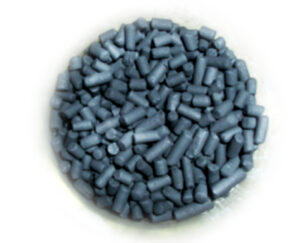
2.2 Structural Damage and CMS Powdering
Long-term exposure to moisture can cause:
-
Micropore swelling
-
Structural softening
-
Increased mechanical attrition during pressure cycling
Under continuous PSA cycling, water accelerates:
-
Particle fragmentation
-
Powder formation
-
Bed channeling and airflow blockage
Normal CMS lifespan: 5–8 years
High-humidity conditions without proper drying: 2–3 years or less
Premature replacement significantly increases operating costs.
2.3 Increased Energy Consumption
To maintain nitrogen purity under wet conditions, operators may:
-
Increase operating pressure
-
Extend adsorption time
-
Increase regeneration airflow
This leads to:
-
Higher electricity consumption
-
Reduced system efficiency
-
Higher maintenance frequency
3. How to Protect Carbon Molecular Sieve in High Humidity Environments
Although CMS is sensitive to moisture, proper engineering solutions ensure reliable operation even in tropical or coastal regions.
3.1 Install High-Efficiency Air Drying Systems
Air pretreatment is the most critical protection measure.
Recommended solutions:
Refrigerated Air Dryer
-
Removes bulk moisture by cooling compressed air
-
Achieves dew point: -20°C to -40°C
-
Suitable for moderate humidity regions
Desiccant Air Dryer
-
Uses activated alumina or silica gel
-
Achieves dew point: -40°C to -70°C
-
Recommended for high-purity nitrogen systems
Combined Drying System
(Refrigerated dryer + desiccant dryer)
-
Ideal for tropical climates
-
Suitable for continuous industrial operation
Maintaining low dew point is the key to protecting carbon molecular sieve.
3.2 PSA System Design Optimization
Professional nitrogen generator design includes:
-
Automatic condensate drain systems
-
Proper air filtration (oil removal + particulate filters)
-
Optimized regeneration cycle
-
Twin-tower alternating design
A well-designed twin-tower PSA system ensures full regeneration and moisture removal before switching cycles.
3.3 Use Moisture-Resistant Carbon Molecular Sieve
Advanced CMS products feature:
-
Surface modification for improved hydrophobicity
-
Optimized pore distribution
-
Enhanced mechanical strength
High-quality moisture-resistant CMS can maintain stable nitrogen production even at 60–80% ambient humidity — provided air pretreatment is adequate.
As a manufacturer, we offer CMS grades designed specifically for:
-
High humidity regions (Southeast Asia, South America, coastal Europe)
-
Food and pharmaceutical industries
-
Long-cycle industrial nitrogen plants
4. Best Practices for Operating PSA Nitrogen Generators in Humid Climates
For customers in tropical or coastal regions, we recommend:
-
Regular monitoring of inlet dew point
-
Nitrogen purity tracking
-
Replacing desiccant materials every 3–6 months
-
Avoiding prolonged operation in >90% RH without upgraded drying systems
Preventive maintenance protects both CMS and the entire nitrogen generation system.
5. Why Choosing the Right Carbon Molecular Sieve Supplier Matters
Not all carbon molecular sieve products perform the same in humid conditions.
A reliable CMS supplier should provide:
-
High crush strength
-
Uniform pore distribution
-
Low dust content
-
Stable oxygen adsorption rate
-
Technical guidance on dryer configuration
We support OEM nitrogen generator manufacturers and industrial end-users with:
-
Custom CMS grades
-
Bulk supply with stable quality
-
Technical consultation for humid environments
-
Long service life assurance
Conclusion: Can Carbon Molecular Sieve Adapt to High Humidity?
Carbon molecular sieve is sensitive to moisture — but with proper air drying, system design, and high-quality CMS material, PSA nitrogen generators can operate reliably even in high-humidity environments.
The key is not avoiding humidity — but engineering for it.
If you are sourcing carbon molecular sieve for PSA nitrogen generators, especially for tropical or coastal markets, choosing the right material and supplier will directly impact:
-
Nitrogen purity
-
Energy efficiency
-
System lifespan
-
Operating cost
Looking for High-Performance Carbon Molecular Sieve?
We are a professional carbon molecular sieve manufacturer supplying global nitrogen generator companies and industrial users.
Contact us today for:
-
Technical data sheets
-
Free consultation
-
Bulk pricing
-
Sample testing
Let’s optimize your PSA nitrogen system for long-term performance — even in high humidity environments.