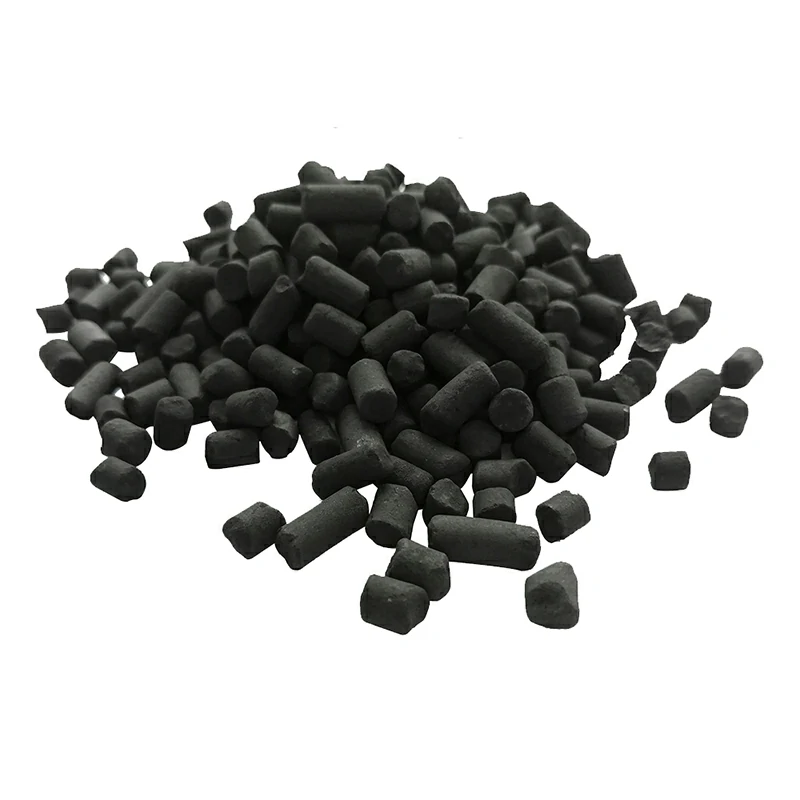
PSA Nitrogen Generator Carbon Molecular Sieve Regeneration Time Calculation | CMS Manufacturer Guide
Learn how to calculate carbon molecular sieve regeneration time in PSA nitrogen generators. Discover key factors affecting CMS performance, adsorption cycle optimization, and how to improve nitrogen purity. Expert guide from a professional carbon molecular sieve manufacturer.
How to Calculate Carbon Molecular Sieve Regeneration Time in PSA Nitrogen Generators
Carbon Molecular Sieve (CMS) is the core adsorbent used in PSA nitrogen generators. The regeneration time of carbon molecular sieve directly affects nitrogen purity, nitrogen output capacity, energy consumption, and CMS service life.
As a professional carbon molecular sieve manufacturer, we often receive questions from overseas buyers:
- How long should the regeneration time be?
- Why does nitrogen purity drop after long-term operation?
- How to optimize PSA cycle time for better efficiency?
In this technical guide, we explain how to calculate carbon molecular sieve regeneration time, the key influencing factors, and practical adjustment strategies to optimize your PSA nitrogen system.
1. PSA Nitrogen Generation Principle and CMS Regeneration Process
PSA (Pressure Swing Adsorption) nitrogen generators separate nitrogen from compressed air through cyclic adsorption and desorption.
Adsorption Stage
- Compressed air (0.6–1.0 MPa) enters the adsorption tower.
- Carbon molecular sieve selectively adsorbs oxygen.
- Nitrogen passes through as the product gas.
Regeneration Stage
Once the CMS becomes saturated with oxygen, regeneration begins:
- Pressure is reduced to atmospheric or slight vacuum.
- Product nitrogen is used for back-purging to remove residual oxygen.
- CMS adsorption capacity is restored for the next cycle.
In a dual-tower PSA nitrogen generator, while one tower adsorbs, the other regenerates. Therefore:
Regeneration time is typically equal to adsorption time in two-bed systems.
2. Key Factors Affecting Carbon Molecular Sieve Regeneration Time
Carbon molecular sieve regeneration time is not fixed. It depends on multiple operating parameters:
2.1 Adsorption Time and Oxygen Loading
Longer adsorption time means:
- Higher oxygen adsorption
- Longer regeneration required
Oxygen adsorption capacity depends on:
- CMS pore structure and surface area
- Operating pressure
- Raw air quality
Typical oxygen adsorption capacity:
- 20–30 ml/g at 0.8 MPa (depending on CMS grade)
Higher operating pressure:
- Increases adsorption capacity
- Requires deeper depressurization during regeneration
2.2 Regeneration Method and Parameters
(1) Depressurization Level
- Greater pressure difference → Faster oxygen desorption
- Vacuum regeneration shortens regeneration time
Typical regeneration pressure:
- From 0.8 MPa down to atmospheric or -0.02 MPa
(2) Nitrogen Purge Flow Rate
- Higher purge flow → Faster oxygen removal
- Recommended purge flow: 10–20% of nitrogen production capacity
Insufficient purge flow leads to:
- Incomplete regeneration
- Gradual nitrogen purity decline
(3) Temperature
- Higher temperature reduces adsorption strength
- Regeneration becomes easier
- Regeneration time may shorten
However:
- High humidity increases water adsorption
- Water occupies CMS pores
- Regeneration time must be extended
Recommended inlet air dew point: ≤ -40°C
2.3 Raw Air Conditions
- Oxygen concentration: Lower oxygen → shorter regeneration
- Humidity: High moisture significantly increases regeneration demand
Proper pre-treatment (air dryer + filters) is critical for CMS lifetime.
3. How to Calculate Carbon Molecular Sieve Regeneration Time
There is no universal formula, but regeneration time can be estimated based on adsorption time.
In two-tower PSA systems:
Regeneration time ≈ Adsorption time
Adsorption Time Estimation Formula:
Tadsorption=(CMS weight×adsorption capacity×utilization factor)(air flow×oxygen concentration)×60T_{adsorption} = \frac{(CMS\ weight × adsorption\ capacity × utilization\ factor)}{(air\ flow × oxygen\ concentration)} × 60
Where:
- CMS weight (kg)
- Adsorption capacity (ml/g)
- Utilization factor: 0.6–0.8
- Air flow: Nm³/h
- Oxygen concentration: approx. 21%
Example Calculation
System parameters:
- CMS filling: 100 kg
- Adsorption capacity: 25 ml/g
- Air flow: 100 Nm³/h
- Utilization factor: 0.7
Step 1: Total adsorption capacity
100 kg × 1000 g/kg × 25 ml/g = 2.5 Nm³
Step 2: Oxygen flow rate
100 Nm³/h × 21% = 21 Nm³/h
Step 3: Adsorption time
(2.5 × 0.7) ÷ 21 × 60 ≈ 5 minutes
Therefore:
- Adsorption time ≈ 5 minutes
- Regeneration time ≈ 5 minutes
- 1 min depressurization
- 4 min nitrogen purge
Total PSA cycle: ~10 minutes
4. Practical Optimization Strategies for PSA Nitrogen Systems
In real industrial operation, regeneration time must be fine-tuned.
Case 1: Nitrogen Purity Drops
Example:
99.9% → 99.5%
Possible causes:
- Incomplete regeneration
- Insufficient purge flow
Solutions:
- Increase purge time by 1–2 minutes
- Increase purge gas ratio
- Check dew point and air pretreatment
Case 2: Nitrogen Output Is Insufficient
If cycle time is too long:
- Production capacity decreases
Solution:
- Slightly reduce regeneration time
- Monitor purity stability carefully
Case 3: CMS Aging After 1–2 Years
Symptoms:
- Reduced adsorption performance
- Faster breakthrough
Solution:
- Extend regeneration time by 20–30%
- Replace CMS if performance declines significantly
Case 4: Seasonal Environmental Changes
- Summer: Higher temperature → shorter regeneration
- Winter/high humidity: Longer regeneration required
Dynamic adjustment improves efficiency.
5. Why Proper Regeneration Time Is Critical
Correct regeneration time ensures:
- Stable nitrogen purity (95%–99.999%)
- Lower energy consumption
- Longer carbon molecular sieve lifespan
- Reduced replacement cost
- Higher ROI for nitrogen generator systems
Poor regeneration management leads to:
- CMS premature failure
- Oxygen breakthrough
- Increased operating costs
6. Manufacturer Recommendations for International Buyers
As a professional carbon molecular sieve manufacturer for PSA nitrogen generators, we recommend:
- Always match CMS grade with your pressure and purity requirement.
- Maintain inlet air dew point below -40°C.
- Design purge ratio properly (10–20%).
- Test and optimize cycle time during commissioning.
- Replace CMS every 3–5 years depending on operating conditions.
If you are:
- Building a new PSA nitrogen plant
- Upgrading an existing nitrogen generator
- Looking for high-performance carbon molecular sieve
- Seeking OEM bulk CMS supply
We can provide:
- High adsorption capacity CMS
- Stable pore size distribution
- Low dust & high crush strength
- Custom packing solutions
- Technical support for PSA cycle optimization
Conclusion
Carbon molecular sieve regeneration time is not a fixed value. It must balance:
- Complete oxygen desorption
- Nitrogen purity stability
- Production efficiency
Through proper calculation and operational optimization, PSA nitrogen systems can achieve maximum performance and long-term stability.
If you would like technical assistance in selecting the right carbon molecular sieve or optimizing your PSA nitrogen generator cycle time, contact our engineering team today.
We are ready to support your nitrogen generation project worldwide.