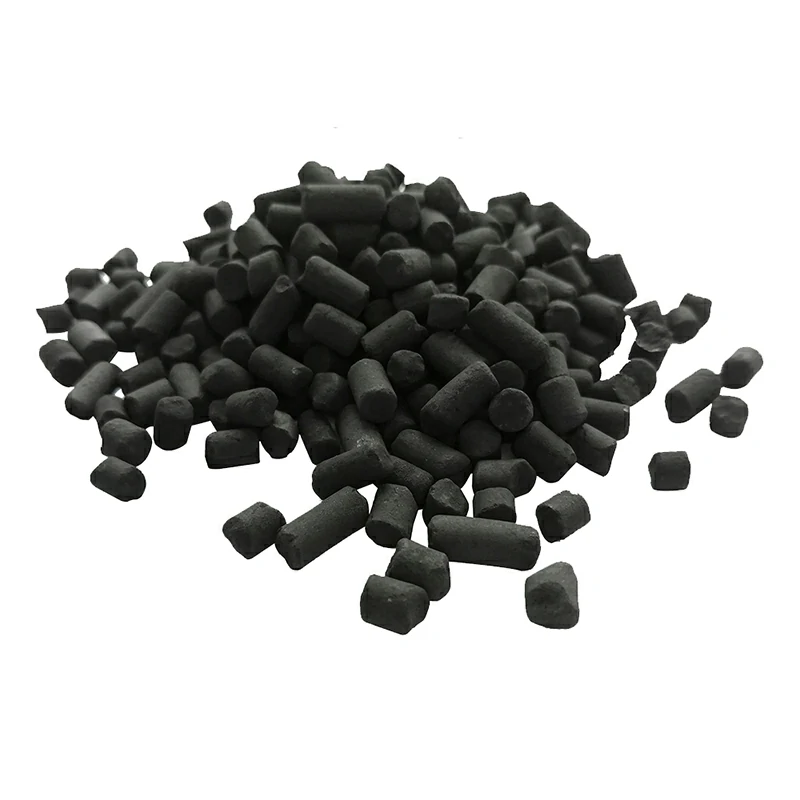
Why Carbon Molecular Sieve Prices Vary So Much in China
If you have sourced Carbon Molecular Sieve (CMS) from China before, you have probably noticed something confusing:
Prices from different suppliers can vary significantly — sometimes by 20%, 30%, or even more.
Many overseas buyers ask:
- Why are some carbon molecular sieve products much cheaper?
- Are all CMS products basically the same?
- How can I identify reliable quality?
- Is lower price really worth it?
As a professional carbon molecular sieve manufacturer, we often receive inquiries from customers who previously experienced quality problems after choosing extremely low-priced products.
In many cases, buyers initially saved money on purchasing costs, but later lost much more through:
- Higher electricity consumption
- Nitrogen purity issues
- Frequent CMS replacement
- PSA system downtime
- Increased maintenance costs
In this article, we will explain why carbon molecular sieve prices differ so much in China and how buyers can avoid costly mistakes.
What Determines Carbon Molecular Sieve Quality?
Carbon molecular sieve is the core material inside PSA nitrogen generators.
Its performance directly affects:
- Nitrogen purity
- Nitrogen output
- Air consumption
- Energy efficiency
- PSA system stability
Although many products may look similar externally, their internal pore structure and adsorption performance can be completely different.
That is why price differences exist.
1. Raw Material Quality Makes a Huge Difference
One of the biggest factors affecting carbon molecular sieve price is the quality of raw materials.
High-quality CMS manufacturers use:
- Better carbon precursors
- Stable raw material sources
- Strict impurity control
- Advanced processing methods
Low-cost suppliers may use:
- Inferior raw materials
- Unstable recycled carbon sources
- Poor impurity control
As a result, low-grade CMS often suffers from:
- Weak adsorption performance
- Unstable nitrogen purity
- Short service life
- High dust generation
Good raw materials cost more, but they also produce more stable long-term performance.
2. Production Technology Directly Impacts Performance
Carbon molecular sieve production is not simply “making carbon pellets.”
The manufacturing process involves:
- Carbonization
- Activation
- Pore size adjustment
- Surface treatment
- High-temperature processing
Advanced production technology helps create:
- Uniform micropore structure
- Faster adsorption speed
- Better nitrogen separation efficiency
- Lower compressed air consumption
Experienced manufacturers invest heavily in:
- Production equipment
- Temperature control systems
- Quality testing laboratories
- Technical process optimization
This is one reason why high-performance carbon molecular sieve cannot be extremely cheap.
3. Crushing Strength Affects CMS Lifespan
Some buyers only focus on nitrogen purity during initial testing.
However, mechanical strength is equally important.
Low-quality CMS pellets often break easily during:
- Transportation
- Loading
- PSA tower pressure cycling
When CMS breaks, excessive dust forms inside the PSA system.
This can lead to:
- Valve damage
- Pipeline blockage
- Airflow imbalance
- Reduced nitrogen purity
- Increased maintenance costs
Higher-strength carbon molecular sieve generally costs more because it requires:
- Better raw materials
- More precise manufacturing
- Strict quality control
But stronger pellets can significantly extend service life.
4. Stable Quality Control Increases Manufacturing Cost
One major difference between professional manufacturers and low-cost suppliers is consistency.
Reliable carbon molecular sieve suppliers implement:
- Batch testing
- Density inspection
- Purity verification
- Crushing strength testing
- Dust content control
Without strict quality control, performance may vary between batches.
This creates serious risks for PSA nitrogen generator users.
For example:
- One shipment performs well
- The next shipment performs poorly
- Nitrogen purity becomes unstable
- System calibration becomes difficult
Stable quality control increases production cost, but it protects long-term customer operations.
5. Cheap CMS Often Consumes More Energy
This is one of the biggest hidden costs.
Low-performance carbon molecular sieve usually requires:
- More compressed air
- Longer adsorption cycles
- Higher compressor workload
This means:
- Higher electricity bills
- Increased equipment wear
- Reduced system efficiency
In many industrial plants, electricity cost is far more expensive than the CMS itself.
A cheaper product that increases energy consumption may actually become more expensive over time.
Why Extremely Cheap Carbon Molecular Sieve Can Be Risky
When buyers compare quotations only by price per kilogram, they may overlook critical performance differences.
Extremely low-priced CMS products often involve:
- Lower adsorption capacity
- Poor pore size distribution
- Shorter lifespan
- Higher dust content
- Unstable purity performance
Some suppliers compete mainly through price without considering long-term system efficiency.
For PSA nitrogen generator users, this can create major operational risks.
How to Evaluate Carbon Molecular Sieve Beyond Price
1. Compare Nitrogen Yield
Higher-quality CMS can produce more nitrogen using the same compressed air input.
This improves overall operating efficiency.
2. Evaluate Energy Consumption
Ask suppliers about:
- Air-to-nitrogen ratio
- Recommended operating conditions
- Long-term energy performance
Lower energy consumption often creates much greater long-term savings.
3. Check Service Life
Professional manufacturers should provide estimated service life under normal PSA operating conditions.
Longer lifespan means:
- Lower replacement frequency
- Reduced downtime
- Lower maintenance cost
4. Request Technical Data Sheets
A reliable supplier should provide:
- COA
- Technical specifications
- Bulk density
- Crushing strength
- Nitrogen purity data
- Dust content information
Professional documentation often reflects professional manufacturing capability.
5. Test Samples Before Bulk Orders
Always test carbon molecular sieve in actual PSA systems before placing large orders.
Real operating conditions provide the most accurate performance evaluation.
Testing helps verify:
- Nitrogen purity
- Air consumption
- Startup performance
- Dust generation
- System stability
Why Long-Term Cooperation Matters
Choosing a carbon molecular sieve supplier is not only about one shipment.
Reliable long-term suppliers can help customers with:
- Technical support
- Product optimization
- Stable supply
- Faster communication
- Better consistency
For industrial nitrogen generation systems, stable long-term performance is far more valuable than short-term price savings.
The Real Cost of Low-Quality Carbon Molecular Sieve
Many buyers discover the real cost only after installation.
Problems caused by low-quality CMS may include:
- Production interruption
- Nitrogen purity failure
- Customer complaints
- Equipment damage
- Emergency replacement costs
These losses are often much larger than the initial price difference.
That is why experienced PSA nitrogen generator manufacturers usually focus more on stability and efficiency rather than simply choosing the cheapest product.
Final Thoughts
Carbon molecular sieve prices vary widely in China because product quality, manufacturing technology, raw materials, and performance standards are very different.
When sourcing carbon molecular sieve, buyers should evaluate:
- Product stability
- Energy efficiency
- Mechanical strength
- Service life
- Supplier experience
- Technical support
The lowest price does not always provide the best value.
A reliable carbon molecular sieve supplier can help reduce energy consumption, improve PSA nitrogen generator performance, and lower long-term operating costs.
For industrial users, stable performance is always more important than short-term savings.